
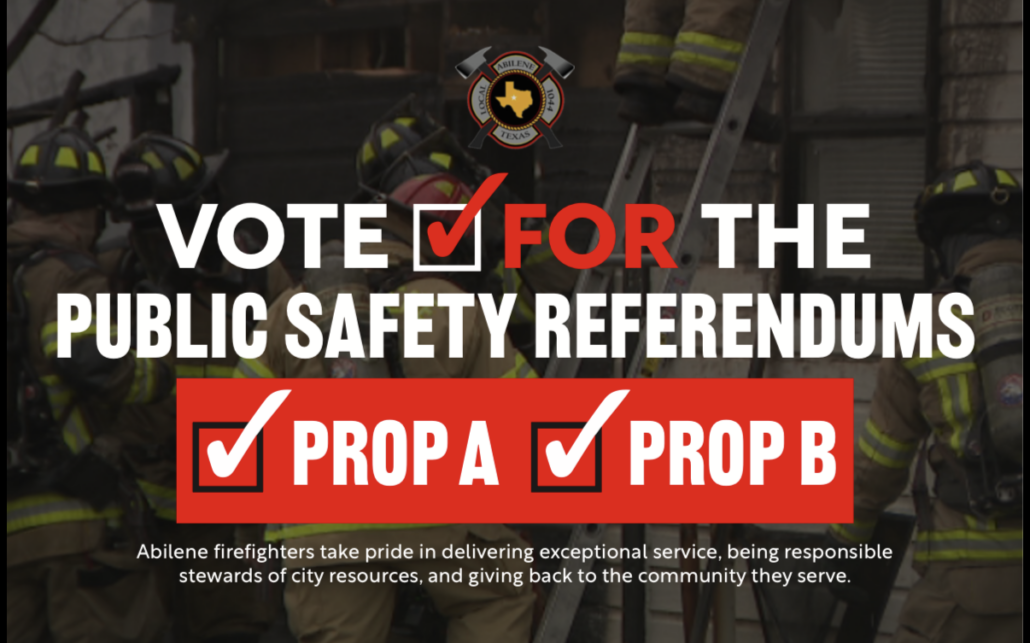
Vote FOR Prop A – Texas Firefighter Collective Bargaining
What is Collective Bargaining?
Collective Bargaining is a formal process for negotiations between firefighters and the City.
Texas Local Government Code Chapter 174 outlines the Collective Bargaining process and rights for employees of many Texas cities.
Collective Bargaining is a process in which employers and employees discuss the terms and conditions of employment. These discussions lead to a Collective Bargaining agreement (employment contract) that outlines wages, hours, and working conditions. Through collaboration and mutual respect, employers and employees can develop
A Collective Bargaining agreement that is reflective of the shared values of the community while delivering high-quality services to the citizens.
Collective bargaining increases resident safety and enhances services.
Firefighters are public safety advocates and experts. We are committed to delivering the highest-quality fire and emergency medical services to residents and taxpayers. Collective Bargaining gives public safety experts, your firefighters, a voice in how we deliver these services to our community. Community safety is our number one priority, and we will continually advocate for the highest-quality services for our citizens. Elected and appointed officials come and go; Abilene Firefighters will always be the voice of public safety for our community.
By its very nature, Collective Bargaining promotes transparency. Local government transparency often increases efficiency and is always good public policy.
Collective Bargaining recruits, retains, and engages employees. The goal of Collective Bargaining is to ensure that firefighters’ compensation and benefits are competitive and fair to both the city and the employee, and to ensure our community has enough highly trained firefighters to protect it. The healthiest workplaces are those where employees are valued, respected, and feel a shared set of values across the organization. Through Collective Bargaining, employees know their voice is heard, and they are partners in collaborative decision-making.
Does Collective Bargaining create a union or require firefighters to join a union?
No. Texas law prohibits any organization from requiring membership in any employee association, union, or group. Collective Bargaining does NOT change that.
In fact, Texas law guarantees that employees who choose not to join their respective employee association receive the same Bargaining opportunities, benefits, and wages as every other employee in the same class.
What requirements would Collective Bargaining place on the City of Abilene?
Under the Texas Collective Bargaining law, the City of Abilene would be required to recognize the group chosen by the majority of Abilene firefighters as their exclusive Bargaining representative.
The City would then have to meet and bargain in good faith with the chosen group over mandatory subjects of Bargaining, such as wages, benefits, hours, and mutually agreed-upon working conditions.
The law requires the city to offer wages commensurate with similar skilled work in comparable private-sector industries. This does not obligate the city to any particular wage; rather, it ensures the city will bargain to fairly accomplish one of the Texas legislature’s primary goals in drafting the law: that cities can attract, hire, and retain the best and brightest.
The City of Abilene would retain management rights to set broader department policies and directives for Fire Department operations.
Are there any costs associated with Collective Bargaining?
There are no explicit costs associated with implementing Collective Bargaining.
Most cities and fire departments across Texas negotiate Collective Bargaining contracts and agreements with their staff attorney, city managers, Fire Chiefs, and HR. Most cities do not hire outside firms to bargain contracts; instead, they assign council members, City Manager’s Office staff, or HR personnel, along with a representative from the Fire Chief’s office. Most Texas firefighters’ associations with Collective Bargaining also do not hire outside counsel, contractors, or attorneys to bargain on their behalf. Collective Bargaining is a Collective process to meet in the middle through honest negotiation and transparent budget analysis.
Vote FOR Prop B – Texas Binding Arbitration
What is Binding Arbitration?
Binding Arbitration is a formal process for negotiations between firefighters and the City.
What happens if the City of Abilene and Abilene Firefighters cannot come to an agreement under Collective Bargaining?
Under current state law, each party can either remove the disputed issue from the contract and pass the remainder of the contract or pursue third-party, neutral arbitration.
As a last resort, a lawsuit may compel a court to weigh in on certain contract matters. However, this process is rare, expensive, and usually an inefficient way to resolve disputes.
Firefighters and cities across Texas have successfully established a “binding arbitration” clause in their first contract. This simple, mutually agreed-upon article builds in a safeguard against any disagreement and brings in a random, neutral arbitrator to rule on issues that cannot be reasonably negotiated.